Biography
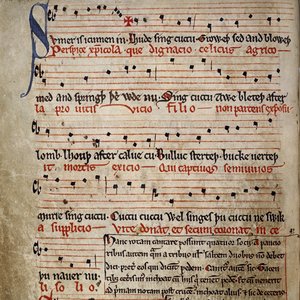
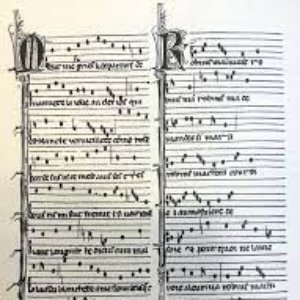
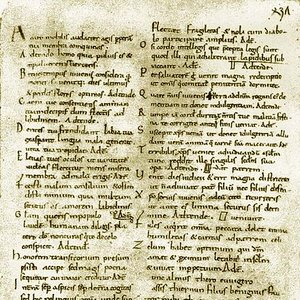
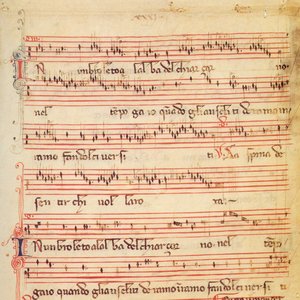
Carmina Burana Latin for “Songs from Beuern” (short for: Benediktbeuern), is the name given to a manuscript of 254 poems and dramatic texts from the 11th or 12th century, although some are from the 13th century. The pieces were written almost entirely in Medieval Latin; a few in Middle High German, and some with traces of Old French or Provençal. Many are macaronic, a mixture of Latin and German or French vernacular.
They were written by students and clergy when the Latin idiom was the lingua franca across Italy and western Europe for travelling scholars, universities and theologians. Most of the poems and songs appear to be the work of Goliards, clergy (mostly students) who set up and satirized the Catholic Church. The collection preserves the works of a number of poets, including Peter of Blois, Walter of Châtillon and an anonymous poet, referred to as the Archpoet.
The collection was found in 1803 in the Benedictine monastery of Benediktbeuern, Bavaria, and is now housed in the Bavarian State Library in Munich. Along with the Carmina Cantabrigiensia, the Carmina Burana is the most important collection of Goliard and vagabond songs.
The manuscripts reflect an “international” European movement, with songs originating from Occitania, France, England, Scotland, Aragon, Castile and the Holy Roman Empire
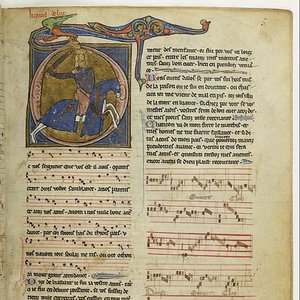
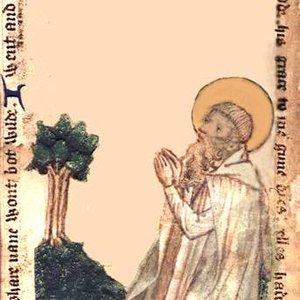
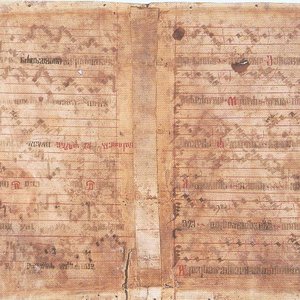
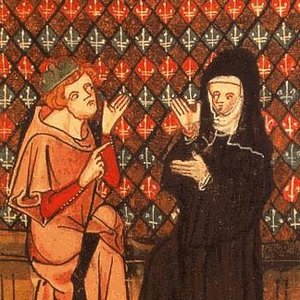
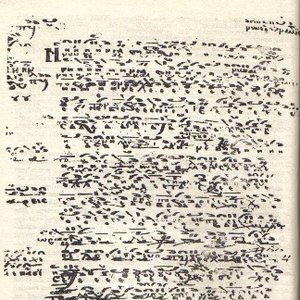
The Carmina Burana (abbreviated CB) is a manuscript scribed in 1230 by two different writers in an early gothic minuscule on 119 sheets of parchment. In the 14th century, a folio of free pages, cut of a slightly different size, was attached at the end of the text. The handwritten pages were bound into a small folder, called the Codex Buranus, in the Late Middle Ages. However, in the process of binding, the text was placed partially out of order, and some pages were most likely lost as well. The manuscript contains eight miniatures: the wheel of fortune (which actually is an illustration from the songs CB 14–18, but was placed by the book binder as the cover), an imaginative forest, a pair of lovers, scenes from the story of Dido and Aeneas, a scene of drinking beer, and three scenes of playing games – dice, ludus duodecim scriptorum, and chess
Older research took it to be the case that the manuscript was written where it was found in Benediktbeuern. Today, however, there is disagreement in the community of Carmina Burana scholars over the birthplace of the manuscript. What is agreed upon is that, because of the dialect of the Middle High German phrases in the text, the manuscript must be from the region of central Europe that speaks the Bavarian dialect of German, which includes parts of southern Germany, western Austria, and northern Italy, and, because of the Italian peculiarities of the text, it must be from the southern region thereof. The two possible locations of its origin are either the bishop’s seat of Seckau in Styria, or Kloster Neustift near Brixen in South Tirol.
In support of the first theory: a bishop Heinrich, who was provost there from 1232 to 1243, was mentioned as provost of Maria Saal in Kärnten in CB 6* of the added folio (* denotes the song is in the added folio) and it is possible that he funded the creation of the Carmina Burana; the marchiones (people from Steiermark) were mentioned in CB 219,3 before the Bavarians, Saxons or Austrians, presumably indicating that Steiermark was the closest location to the writers; also most of the hymns were dedicated to Saint Katharina von Alexandrien (CB 12* and 19* – 22*), who was venerated in Seckau.
The other hypothesis claims that Kloster Neustift near Brixen in South Tirol is the birthplace of the Carmina Burana. In support of this argument, the text’s open mindedness is characteristic of the reform-minded Augustine Canons Regular of the time, as is the spoken quality of the writing. Also, Brixen is mentioned in CB 95, and the beginning to a story unique to Tirol called the Eckenlied about the mythic hero Dietrich von Bern appears in CB 203a.
Less clear is how the Carmina Burana traveled to Benediktbeuren. The Germanist Fritz Peter Knapp suggested that, if the manuscript were written in Neustift, it could have traveled in 1350 by way of the Wittelsbacher family, who were Vögte of both Tirol and Bavaria.
Artist descriptions on Last.fm are editable by everyone. Feel free to contribute!
All user-contributed text on this page is available under the Creative Commons Attribution-ShareAlike License; additional terms may apply.