Biography
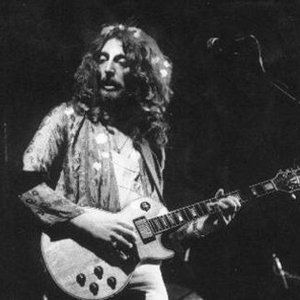
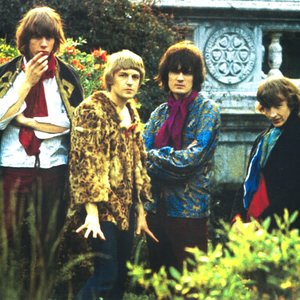
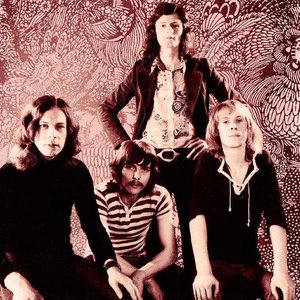
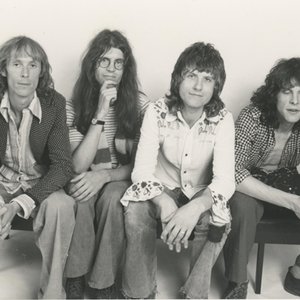
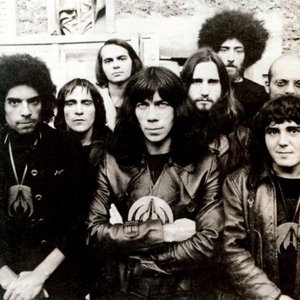
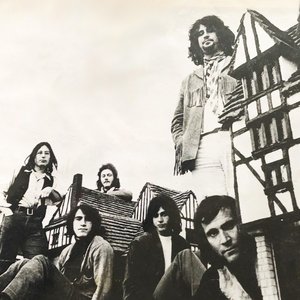
Gong are a rock band associated with the Canterbury scene. Their music incorporates elements of psychedelic rock, progressive rock, space rock, jazz rock and jazz. The group was formed in Paris in 1967 by Australian musician Daevid Allen and English vocalist Gilli Smyth. Over the course of their history, members have included Didier Malherbe, Pip Pyle, Steve Hillage, Mike Howlett, Tim Blake, Pierre Moerlen, Bill Laswell and Theo Travis. Other musicians who have performed with the band include Don Cherry, Chris Cutler, Bill Bruford, Brian Davison, Dave Stewart and Tatsuya Yoshida.
The band's debut album, "Magick Brother" (1970), featured a predominantly psychedelic rock sound. Their second album, "Camembert Electrique" (1971), introduced a stronger progressive and space rock influence that became characteristic of their work. Between 1973 and 1974, Gong released the "Radio Gnome Invisible" trilogy, consisting of "Flying Teapot" (1973), "Angel's Egg" (1973) and "You" (1974). The trilogy presents a narrative centred on characters including Zero the Hero, the Good Witch Yoni and the Pot Head Pixies from the fictional Planet Gong.
Following the departure of Allen and Smyth in 1975, Gong continued with a changing line-up. The band released "Shamal" (1976), featuring Mike Howlett as lead vocalist, before evolving into a jazz rock-oriented group under the leadership of drummer Pierre Moerlen. This version later became known as Pierre Moerlen's Gong. During the same period, Smyth formed Mother Gong, while Allen established several related projects, including Planet Gong, New York Gong and Gongmaison.
Allen resumed leadership of Gong in 1990 and remained with the group until his death in 2015. Before his death, he encouraged the band to continue. The subsequent line-up consisted of guitarist Fabio Golfetti, bassist Dave Sturt, woodwind player Ian East, guitarist and vocalist Kavus Torabi, and drummer Cheb Nettles. This incarnation released "Rejoice! I'm Dead!" (2016), followed by "The Universe Also Collapses" (2019), "Unending Ascending" (2023) and "Bright Spirit" (2026).
The origins of Gong can be traced to 1967, when Daevid Allen, then a member of Soft Machine, was denied re-entry to the United Kingdom after a French tour because his visa had expired. Settling in Paris with Gilli Smyth, he formed an early version of the group with vocalist Ziska Baum and flautist Loren Standlee. This initial incarnation ended during the events of May 1968, when Allen and Smyth left France and relocated to Deià, Mallorca.
In 1969, Allen and Smyth returned to France and assembled a new electric line-up of Gong. Alongside bassist Christian Tritsch, drummer Rachid Houari and saxophonist Didier Malherbe, they recorded "Magick Brother", released in 1970. The band made its live debut at the Festival d'Amougies in Belgium in October 1969. Later that year, Gong established a communal base at Pavillon du Hay, near Sens, France.
During 1971, drummer Pip Pyle replaced Houari. The group recorded the soundtrack for the film "Continental Circus", collaborated on Dashiell Hedayat's album "Obsolete", and appeared at the Glastonbury Festival. Their second album, "Camembert Electrique", helped establish their reputation and led to their first British tour.
The early 1970s were marked by frequent personnel changes. By late 1972, the line-up included bassist Francis Moze and synthesiser player Tim Blake. In October 1972, Gong signed with Virgin Records and recorded "Flying Teapot". During the sessions, guitarist Steve Hillage joined the band and soon became a prominent member.
"Flying Teapot", released in 1973, was the first part of the "Radio Gnome Invisible" trilogy. It was followed by "Angel's Egg" later that year and "You" in 1974. During this period, the band's line-up stabilised around members including Hillage, Malherbe, Blake, bassist Mike Howlett and drummer Pierre Moerlen. The trilogy became the group's best-known body of work and expanded the mythology developed by Allen.
In 1975, tensions within the band led to the departures of Tim Blake and subsequently Daevid Allen. Pierre Moerlen returned as drummer, and Gong recorded "Shamal". During the recording process, Steve Hillage and Miquette Giraudy also departed. Following further disagreements over musical direction, Mike Howlett and several other members left.
From 1976 onwards, the group increasingly reflected Pierre Moerlen's musical interests, emphasising instrumental jazz rock and percussion-based compositions. Albums from this period included "Gazeuse!" and releases under the names Gong-Expresso and Pierre Moerlen's Gong. Moerlen continued leading related projects until the late 1980s.
A major Gong reunion took place in Paris in 1977, bringing together musicians associated with several branches of the Gong family. The event was documented on the live album "Gong est Mort, Vive Gong". During the late 1970s and 1980s, Allen expanded the Gong mythology through projects such as Planet Gong and New York Gong, while Smyth led Mother Gong.
After spending much of the 1980s in Australia, Allen returned to the United Kingdom and formed Gongmaison, a project incorporating electronic and dance-influenced elements. In 1990, the Gong name was revived for a television appearance, and by 1992 Gongmaison had formally become Gong. The resulting line-up recorded "Shapeshifter", sometimes described as a continuation of the "Radio Gnome Invisible" narrative.
Gong celebrated their 25th anniversary in 1994 with a concert in London featuring several former members. From the mid-1990s onwards, the group toured internationally and released "Zero to Infinity" in 2000. Subsequent line-ups included musicians such as Theo Travis and Chris Taylor.
In 2003, Allen assembled a new version of the band incorporating members of Acid Mothers Temple. This line-up recorded "Acid Motherhood" (2004) and released the live album "Acid Mothers Gong Live Tokyo". Around the same period, a series of events known as the Gong Family Unconventions brought together current and former members and numerous related groups.
Allen later formed Gong Global Family, a Brazil-based project featuring Fabio Golfetti and other South American musicians. Elements of this line-up would later contribute to the main Gong group.
In 2008, Gong reunited with Allen, Smyth, Hillage, Giraudy, Howlett, Travis and Taylor. This line-up recorded "2032" (2009) and undertook extensive touring. Further personnel changes followed, with Dave Sturt, Ian East, Fabio Golfetti, Kavus Torabi and Cheb Nettles joining the group.
The album "I See You" was released in 2014. During this period, Allen was diagnosed with cancer and was unable to participate fully in touring activities. He died on 13 March 2015 in Byron Bay, Australia, at the age of 77. Shortly before his death, he expressed his wish that the band continue and suggested Kavus Torabi as its future frontman.
Gilli Smyth died on 22 August 2016 at the age of 83.
Following Allen's death, Gong continued with the line-up of Torabi, Golfetti, Sturt, East and Nettles. Their first post-Allen album, "Rejoice! I'm Dead!", was released in 2016 and featured guest contributions from several former members. Subsequent releases included "The Universe Also Collapses" (2019), "Unending Ascending" (2023) and "Bright Spirit" (2026). The band has continued to record and perform while maintaining connections to its historical repertoire and mythology.
Full Wikipedia article: https://en.wikipedia.org/wiki/Gong_(band)
Studio albums
Magick Brother (1970)
Camembert Electrique (1971)
Flying Teapot (1973)
Angel's Egg (1973)
You (1974)
Shamal (1976)
Gazeuse! (1976, Expresso in North America)
Expresso II (1978)
Shapeshifter (1992)
Zero to Infinity (2000)
Acid Motherhood (2004, with Acid Mothers Temple)
2032 (2009)
I See You (2014)
Rejoice! I'm Dead! (2016)
The Universe Also Collapses (2019)
Unending Ascending (2023)
Bright Spirit (2026)
Artist descriptions on Last.fm are editable by everyone. Feel free to contribute!
All user-contributed text on this page is available under the Creative Commons Attribution-ShareAlike License; additional terms may apply.