Biography
-
Years Active
1971 – 1986 (15 years)
-
Founded In
New York, New York, United States
-
Members
- Airto Moreira
- Alphonse Mouzon
- Alphonso Johnson
- Alyrio Lima
- Andrew White
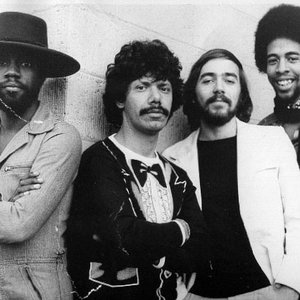
Weather Report was an American jazz fusion band active from 1970 to 1986. The group was founded by Austrian keyboardist Joe Zawinul, American saxophonist Wayne Shorter, Czech bassist Miroslav Vitouš, American drummer Alphonse Mouzon, and American percussionists Don Alias and Barbara Burton. Although Zawinul and Shorter initially shared leadership of the band, Zawinul became its principal composer and musical director during the 1970s. Other notable members included bassists Alphonso Johnson, Jaco Pastorius, and Victor Bailey; drummers Chester Thompson, Peter Erskine, and Omar Hakim; and percussionists Airto Moreira, Alex Acuña, and Manolo Badrena. For much of its history, Weather Report's core line-up consisted of Zawinul, Shorter, a bassist, a drummer, and a percussionist.
Weather Report emerged during the early development of jazz fusion and is regarded as one of the genre's leading groups. Alongside acts such as Mahavishnu Orchestra, Return to Forever, and Herbie Hancock's Headhunters, the band played a significant role in shaping the style's development. During the 1970s, several of its albums received critical recognition, including multiple Album of the Year awards from DownBeat magazine.
Over its sixteen-year career, Weather Report incorporated elements of free jazz, jazz fusion, funk, rhythm and blues, rock, world music, and electronic music. The group's early recordings emphasised collective improvisation and departed from the traditional jazz distinction between soloists and accompanists. While individual solos became more prominent in later years, the ensemble approach remained central to the band's music. By the mid-1970s, the group had moved towards more structured compositions and groove-based arrangements, exemplified by the 1977 single "Birdland".
Joe Zawinul's playing combined jazz improvisation with influences from popular and international musical traditions. He was among the early adopters of synthesizers in jazz and worked extensively with electronic instruments and sound processing technologies. His use of synthesizers, vocoders, and sampled sounds became a defining feature of Weather Report's sound.
Wayne Shorter entered the project with an established reputation based on his solo work and his membership of Miles Davis's second great quintet. In Weather Report, he often adopted a more restrained role, contributing melodic, harmonic, and rhythmic ideas within the group's collective framework. As a composer, he frequently explored abstract and modal approaches, complementing the more direct melodic style often associated with Zawinul.
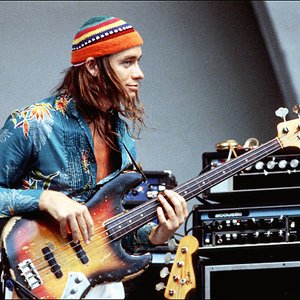
The band also became known for its interest in technological innovation. Both Zawinul and bassist Miroslav Vitouš experimented with electronic effects, while Jaco Pastorius helped popularise the fretless electric bass through his melodic playing style, use of harmonics, and solo techniques. Pastorius' contributions became a major influence on subsequent generations of bass players.
With the exception of a brief period between 1978 and 1979, Weather Report generally included both a drummer and a percussionist. The group experienced frequent personnel changes, particularly among drummers, before achieving greater stability during the late 1970s and early 1980s.
Joe Zawinul and Wayne Shorter first met in 1959 while performing with Maynard Ferguson's orchestra. During the 1960s, Zawinul worked with Cannonball Adderley, while Shorter became a member of Art Blakey's Jazz Messengers and later Miles Davis's quintet. Both musicians contributed to Davis's pioneering fusion recordings, including "In a Silent Way" (1969) and "Bitches Brew" (1970).
Weather Report was formed in 1970. Accounts differ regarding the group's origins. Zawinul stated that he and Shorter recruited Miroslav Vitouš, while Vitouš maintained that he and Shorter founded the band before inviting Zawinul to join. Regardless of the sequence of events, Zawinul, Shorter, and Vitouš formed the group's initial creative core.
The band's self-titled debut album, "Weather Report", was released in 1971. It featured an experimental sound rooted in free jazz and collective improvisation. The follow-up album, "I Sing the Body Electric" (1972), combined studio recordings with live performances recorded in Tokyo.
A significant stylistic shift occurred with "Sweetnighter" (1973), which introduced stronger funk and rhythm and blues influences. This transition contributed to creative disagreements between Zawinul and Vitouš. Vitouš preferred the band's earlier improvisational direction, while Zawinul advocated a more groove-oriented approach. Vitouš left the group in 1973, ending the partnership that had formed the band's original foundation.
Vitouš was replaced by bassist Alphonso Johnson. During this period, Weather Report continued to develop a more structured and rhythmically driven style. Albums such as "Mysterious Traveller" (1974) and "Tale Spinnin'" (1975) further expanded the group's use of electronic instruments and international musical influences.
The 1976 album "Black Market" marked another transitional phase. Johnson departed during its recording and was succeeded by Jaco Pastorius, who contributed to two tracks. Pastorius soon became a full member and played a major role in the band's subsequent success.
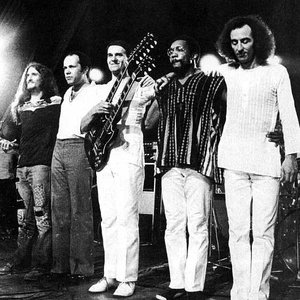
The line-up of Zawinul, Shorter, Pastorius, Alex Acuña, and Manolo Badrena achieved widespread recognition. Their 1977 album "Heavy Weather" became Weather Report's most commercially successful release and included "Birdland", which became one of the group's best-known compositions and later a jazz standard. During this period, the band expanded its audience beyond traditional jazz listeners and adopted larger-scale concert productions.
In 1978, Weather Report released "Mr. Gone", which incorporated extensive studio experimentation and featured contributions from several guest drummers, including Peter Erskine. Although the album received mixed critical responses, it reached the top of the Billboard Jazz Albums chart. Erskine subsequently became a permanent member of the band.
The live album "8:30" (1979) documented the group's late-1970s line-up and won the Grammy Award for Best Jazz Fusion Performance. In the same year, Weather Report participated in the Havana Jam festival in Cuba.
The 1980 album "Night Passage" reflected a renewed emphasis on jazz traditions while retaining the band's contemporary sound. During this period, Jaco Pastorius increasingly focused on his own projects, and tensions developed within the group.
The second self-titled album, "Weather Report" (1982), demonstrated a growing emphasis on composed material. Following its release, Pastorius, Erskine, and percussionist Robert Thomas Jr. left the group, prompting another major reorganisation.
Zawinul and Shorter assembled a new line-up featuring drummer Omar Hakim, bassist Victor Bailey, and percussionist José Rossy. This version of the band recorded "Procession" (1983), "Domino Theory" (1984), and "Sportin' Life" (1985). These albums incorporated digital technologies such as drum machines, samplers, and MIDI systems, while continuing the band's exploration of world music influences.
By 1986, both Zawinul and Shorter had become increasingly involved in other projects. Shorter left the group to concentrate on his solo career, and Zawinul chose not to continue using the Weather Report name. The final album, "This Is This!", was released in 1986 and fulfilled the band's contractual obligations to Columbia Records.
After Weather Report's dissolution, Zawinul formed Weather Update, a short-lived successor project that included several former members. He later led The Zawinul Syndicate. Wayne Shorter continued his solo career and work as a bandleader until his death in 2023.
Although various reunion projects were discussed, Weather Report never formally reunited. The closest approximation occurred in 1991, when Zawinul and Shorter performed together with Miles Davis in Paris.
Several members of the band have died. Jaco Pastorius died in 1987 following injuries sustained in an assault. Dom Um Romão died in 2005. Joe Zawinul died in 2007 from Merkel cell carcinoma. Victor Bailey died in 2016. Alphonse Mouzon died later that year. Wayne Shorter died in 2023.
Weather Report's recordings and innovations in jazz fusion, electronic instrumentation, ensemble improvisation, and bass performance have had a lasting influence on jazz and related musical genres.
Full Wikipedia article: https://en.wikipedia.org/wiki/Weather_Report
Studio albums
Weather Report (1971)
I Sing the Body Electric (1972)
Sweetnighter (1973)
Mysterious Traveller (1974)
Tale Spinnin' (1975)
Black Market (1976)
Heavy Weather (1977)
Mr. Gone (1978)
Night Passage (1980)
Weather Report (1982)
Procession (1983)
Domino Theory (1984)
Sportin' Life (1985)
This Is This! (1986)
Artist descriptions on Last.fm are editable by everyone. Feel free to contribute!
All user-contributed text on this page is available under the Creative Commons Attribution-ShareAlike License; additional terms may apply.